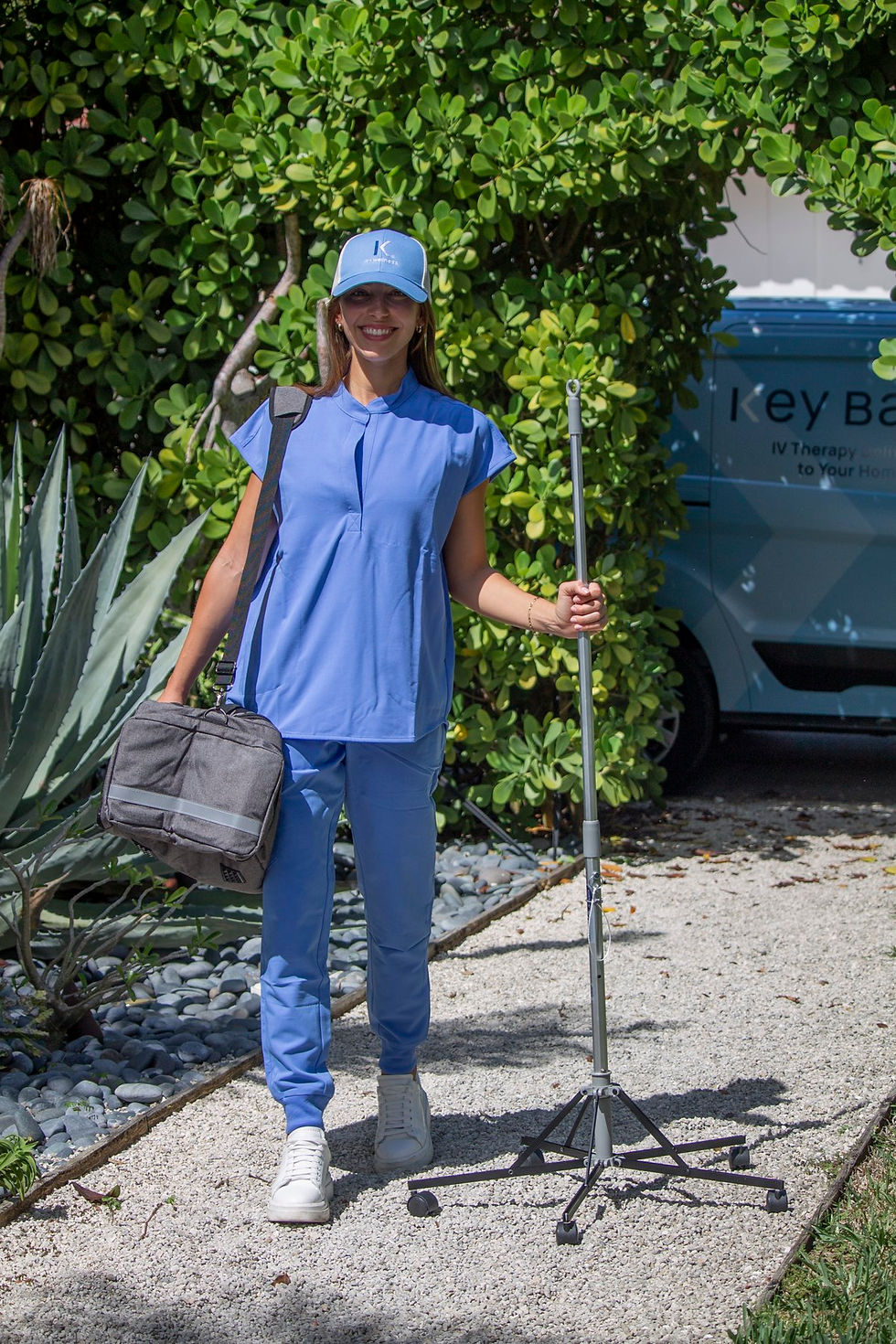
Essential Miami At-Home IV Safety Protocols Every Client Should Expect
- keybasis
- Dec 2, 2025
- 12 min read


At-home IV infusion delivers intravenous therapy—such as hydration, vitamins, or medications—directly in a client’s residence, and safety must be the defining priority because IV procedures bypass normal barriers and introduce fluid or drugs into the bloodstream. This guide explains exactly what Miami clients should expect before, during, and after a nurse-led mobile IV infusion so they can evaluate risk, verify competence, and follow clear care steps. You will learn the pre-infusion screening items that determine eligibility, the sterile technique nurses must use, the real-time monitoring that prevents complications, post-infusion site care, how Florida rules and national standards apply, and concrete verification steps clients can use to choose a trustworthy provider. The content integrates practical checklists, EAV-style tables, and observable cues so readers can take action during appointments. By covering nurse qualifications, equipment verification, monitoring cadence, complication management, and verification steps, this article builds a step-by-step safety map for Miami residents considering home IV therapy.
What Are the Key Pre-Infusion Safety Steps for Miami At-Home IV Therapy?
Pre-infusion safety begins with a structured client evaluation to identify contraindications, confirm medication compatibility, and determine an appropriate infusion plan based on clinical risk. Nurses performing mobile IV therapy should review medical history, current medications, allergies, recent laboratory results if relevant, and baseline vital signs to minimize adverse events and guide vein selection. A clear medication reconciliation process reduces interaction risks and ensures that prescribed fluids or additives match the client’s needs and safety profile. The assessment also determines whether the home environment can support a safe, sterile procedure and whether emergency access is feasible should escalation be needed.
How Is a Comprehensive Client Health Assessment Conducted Before Infusion?
A comprehensive pre-infusion assessment documents medical history, active medications, allergy history, recent symptoms, and any chronic conditions that affect IV eligibility, such as bleeding disorders or heart failure. The nurse will take baseline vital signs—blood pressure, heart rate, respiratory rate, and oxygen saturation when indicated—and perform a physical check of potential IV access sites, noting skin integrity and local circulation. Medication reconciliation verifies prescription and over-the-counter agents that might interact with infusion components, and the nurse will ask structured screening questions about past infusion reactions or adverse events. This evaluation concludes with a documented eligibility decision and an individualized infusion plan that minimizes risk through dose adjustments or alternative therapies as needed.
What Nurse Qualifications and Training Standards Ensure Safe Mobile IV Therapy?
Safe mobile IV therapy requires registered nurse (RN) licensure plus infusion-focused competency, which includes training in IV insertion, catheter care, and recognition of infusion-related complications. Nurses should have validated skills in aseptic technique, IV site assessment, and emergency response measures; continuing education and documented competency checks reinforce safe practice and keep staff current with evolving guidelines. Employers should verify certifications such as basic life support and infusion-specific training aligned with national standards to ensure clinical readiness. Clients can ask nurses to describe their training and experience; transparent discussion about qualifications helps confirm that the clinician can safely deliver at-home intravenous therapy.
How Do Providers Verify Sterile Equipment and Supplies for Home Use?
Before any home infusion, nurses must confirm single-use, sealed packaging for catheters, tubing, and IV bags and check expiration dates and manufacturer seals to ensure sterility and integrity. Proper supply verification includes pharmacy sourcing documentation for compounded or specialty fluids, visual confirmation of intact sterile packs, and use of sterile gloves and antiseptic skin prep at the bedside. Equipment disposal protocols—secure sharps containers and labeled biohazard bags—must be visible or described to clients as part of safe practice. Asking the nurse about packaging seals and watching for sealed, single-use labels gives clients a simple, actionable way to confirm sterile supplies.
Introductory checklist: the following short pre-infusion checklist summarizes the essential assessments clients should expect before any at-home IV infusion.
Medical history review: Nurse documents chronic conditions and recent illness to identify contraindications.
Medication reconciliation: Active prescriptions and supplements are verified to avoid interactions.
Allergy screening: Allergies and prior infusion reactions are confirmed and documented.
Baseline vitals: Blood pressure, heart rate, and respiration are recorded before starting.
Environment check: The nurse confirms a clean, well-lit space and emergency access.
Assessment Item | Why It Matters | Action / Result |
Allergies | Risk of hypersensitivity or anaphylaxis | Document allergies; avoid offending agents and have emergency meds ready |
Medications | Interaction or potentiation risk | Reconcile meds; adjust infusion composition or timing |
Baseline vitals | Identify instability or contraindications | Record vitals; postpone or alter infusion if abnormal |
IV site exam | Prevent infiltration or infection | Select optimal site; mark and document site condition |
Recent labs | Renal, hepatic, or electrolyte issues affect dosing | Review labs; modify infusion content or volume as needed |
This table shows common pre-infusion checks and the practical actions nurses take to reduce risk, helping clients understand assessment priorities and outcomes.
In addition to universal standards, a reputable Miami mobile IV provider emphasizes nurse-led clinical assessment, sterile single-use equipment, and documented medication sourcing to meet safety expectations. Our approach centers on nurse-led assessments and strict equipment checks performed at each visit so clients receive care consistent with the pre-infusion safety steps outlined above. This brief operational note is intended to reassure readers that nurse competency and sterile practice are practical, verifiable standards in mobile IV therapy.
How Is Sterile Technique Practiced During At-Home IV Infusions in Miami?
Sterile technique for home IV administration is a sequence of evidence-based steps—hand hygiene, PPE use, antiseptic skin preparation, sterile device handling, and securement—that together reduce infection risk and maintain a closed system. Practicing aseptic technique ensures that the catheter and tubing remain uncontaminated during insertion and throughout infusion, which is particularly important in non-clinic settings where environmental controls differ from inpatient facilities. Proper disposal of sharps and biohazard materials after the procedure also prevents post-visit exposure risks. Clients who observe these core sterile behaviors gain confidence in the practice and can spot deviations that warrant polite clarification.
What Are the Essential Steps of Aseptic Technique in Home IV Administration?
Aseptic technique follows a predictable sequence: thorough handwashing or alcohol-based hand rub, donning clean gloves, preparing a sterile field, performing antiseptic skin prep (e.g., chlorhexidine or alcohol scrub), inserting the catheter with minimal contamination, and securing the line while keeping manipulation to a minimum. Each step interrupts common contamination pathways—hands, environment, or supplies—and evidence supports that consistent adherence reduces catheter-related infection rates. The nurse documents the procedure, maintains a closed IV system, and uses single-use devices to prevent cross-contamination. Observing this sequence helps clients understand why each action is performed and what to expect during insertion.
Home IV Therapy Programs: Safety, Cost-Effectiveness, and Patient Outcomes Home intravenous (IV) therapy programs are a growing community health initiative due to their safety, cost-effectiveness, and ability to facilitate earlier patient discharge. These programs provide nursing support for clients receiving antibiotic treatment at home and ongoing education for patients and caregivers. The Surrey Home IV program, launched two decades ago with 3–4 patients, expanded to approximately 505 patients by 2012 but had not been evaluated. This study aimed to assess the outcomes and cost benefits of the program through a retrospective chart review of 168 clients enrolled between January and December 2012. Data were analyzed statistically to evaluate outcomes. Findings indicated that socio-demographic factors (age, gender, caregiver support) were not significantly associated with readmissions or complications. Spousal caregivers facilitated quicker program acceptance by allowing earlier initiation of education. Longer hospital stays were associated with
How Can Clients Observe and Confirm Sterile Practices During Their Infusion?
Clients can look for clear, observable cues that indicate sterile practice: visible handwashing or use of hand sanitizer immediately before the procedure, new unopened sterile packs, fresh gloves for the insertion, antiseptic applied to skin with a waiting period, and minimal line handling after securement. Polite questions like, “May I see the sterile packaging?” or “When was this tubing opened?” are appropriate and often welcome; clinicians should be prepared to explain their steps. Documentation and a printed procedure summary or consent note also demonstrate transparency about sterile technique. These observable behaviors and questions give clients practical checks without interfering with clinical workflow.
Introductory list: the next list highlights routine aseptic steps nurses use during insertion and handling to maintain sterility in home settings.
Hand hygiene before contact: Nurse washes hands or uses sanitizer just before preparation and insertion.
Use of sterile gloves and kits: A sealed sterile IV kit is opened at bedside for each insertion.
Antiseptic skin prep: The insertion site is cleaned and allowed to dry for maximal effect.
Securement and dressing: Catheter is anchored and covered with sterile dressing to protect the site.
What Continuous Monitoring and Complication Prevention Measures Are Used During Infusion?
Continuous monitoring during infusion includes periodic checks of vital signs, repeated IV site inspections, and assessment of patient comfort to detect early warning signs of complications and permit timely intervention. Monitoring frequency varies with patient risk and infusion complexity but commonly involves checks at initiation, within the first 15–30 minutes, and at regular intervals thereafter, with documentation of each assessment. Preventive measures include appropriate site selection, securement, use of infusion pumps when precise flow control is needed, and conservative infusion rates for fragile veins or high-risk formulations. Clear escalation protocols—how and when to call emergency services—should be explained before leaving the client to ensure rapid response if a complication arises.
Which Vital Signs and Patient Comfort Indicators Are Monitored in Real Time?
During an at-home infusion, nurses typically monitor blood pressure, heart rate, respiratory rate, and oxygen saturation when indicated, alongside repeated inspection of the IV site for swelling, redness, or leakage. Nurses also document subjective indicators such as pain, itching, warmth, shortness of breath, dizziness, or nausea because these symptoms often precede objective changes and require immediate attention. Monitoring cadence is individualized: lower-risk infusions may be checked every 15–30 minutes, while higher-risk treatments or symptomatic clients receive more frequent checks and continuous observation. Accurate documentation ensures continuity of care and supports rapid decision-making if adjustments or escalation are necessary.
How Are Common At-Home IV Complications Prevented and Managed?
Prevention focuses on technique, selection, and vigilance: choosing the correct catheter size and insertion site, securing the line to minimize movement, using appropriate infusion rates, and educating the client to report early symptoms. Management of common issues follows a clear sequence—identify the sign early, stop the infusion, assess the site and patient, and take specific steps such as removing the catheter for infiltration or administering antihistamines/epinephrine for allergic reactions while activating emergency protocols if severe. Nurses are trained to differentiate minor issues manageable at home from serious events requiring emergency services. These prevention and management steps prioritize early recognition and immediate action to reduce morbidity.
Complication | Symptom / Sign | Immediate Nurse Action |
Infiltration | Swelling, coolness, slow/absent flow | Stop infusion, disconnect tubing, elevate limb, remove catheter, apply compress as indicated |
Phlebitis | Redness, warmth, palpable cord, pain | Stop infusion, remove catheter, document, apply warm compress, notify prescriber if needed |
Allergic reaction | Hives, itching, wheeze, hypotension | Stop infusion, maintain airway, give antihistamine/epinephrine per protocol, call EMS if severe |
Air embolism | Sudden dyspnea, chest pain, hypotension | Stop infusion, place patient in left lateral decubitus/Trendelenburg if possible, call EMS immediately |
A brief operational note: nurse-led mobile visits include continuous monitoring and a documented escalation pathway so that any early warning signs trigger predefined interventions. Nurses inform clients before the infusion about emergency procedures and how they will be enacted if necessary, which reinforces patient safety and confidence.
What Immediate Actions Should Nurses Take If Complications Occur?
When a complication is detected, nurses follow a rapid, prioritized checklist: stop the infusion immediately, clamp or disconnect tubing to prevent further exposure, assess the patient’s airway-breathing-circulation, and stabilize the IV site by removing or securing the catheter as indicated. For allergic reactions, nurses administer emergency medications per standing orders and prepare for EMS transfer if symptoms worsen or do not respond; for infiltration, the site is managed locally and the limb elevated while monitoring for tissue injury. Nurses document the event, notify the prescribing clinician, and provide clear instructions for follow-up and signs that warrant emergency services. These stepwise actions protect the client and create a clear record for subsequent care continuity.
What Post-Infusion Safety Steps Should Miami Clients Expect?
Post-infusion safety covers safe device removal, appropriate dressing or bandage application, instructions for home site care, and clear guidance on follow-up and when to seek help. After disconnecting the IV, nurses should apply pressure to stop bleeding, place a sterile dressing, explain expected minor symptoms, and provide written aftercare instructions describing signs of infection or delayed complications. Proper disposal of used supplies—secure sharps containers and biohazard handling—prevents household exposure and reflects adherence to safe waste protocols. A post-visit plan that includes when to expect a follow-up call or how to reach a clinician for questions enhances safety and supports early detection of post-infusion problems.
How Should Clients Care for the IV Site After Treatment?
Clients should keep the dressing clean and dry for the first 24–48 hours, avoid soaking the site, and check periodically for increasing redness, swelling, warmth, or drainage—signs that may indicate infection or delayed complication. If the dressing becomes wet or soiled, it should be replaced with a clean, dry covering after hand hygiene; minor bleeding under the dressing can be managed with gentle pressure and reapplication of a sterile bandage. Clients should avoid strenuous activity that stresses the limb for 24 hours and report persistent pain, spreading redness, fever, or drainage promptly. Clear written instructions and a timeline for expected healing reduce anxiety and ensure timely reporting of concerning changes.
When and How Should Clients Contact Providers for Post-Infusion Concerns?
Clients should treat severe symptoms—difficulty breathing, chest pain, fainting, severe swelling—as emergencies and call 911 immediately, while non-emergent but concerning signs such as fever, persistent redness, or increasing pain should prompt contact with the provider within 24 hours. Providers should offer a clear communication pathway: an on-call number, telehealth follow-up, or scheduled check-ins; clients should know how and when they will be contacted after the visit. When reaching out, describe symptoms, time since infusion, and any self-care already attempted to help the clinician triage the concern. Understanding these response expectations ensures appropriate escalation and timely treatment of post-infusion problems.
Introductory list: common post-infusion instructions typically given to clients.
Keep dressing dry and intact for 24–48 hours to minimize infection risk.
Monitor site for redness, swelling, or drainage and report changes within 24 hours.
Avoid heavy lifting or repetitive activity involving the infusion limb for one day.
Seek emergency care for breathing difficulty, chest pain, or sudden swelling.
What Miami-Specific Regulations and Standards Govern At-Home IV Infusion Safety?
Miami at-home IV services operate within Florida’s regulatory framework for nursing practice and home healthcare, and providers should align their policies with state licensure rules and national infusion standards to ensure safe, compliant care. Florida requires active RN licensure for nurses performing clinical procedures, and mobile services must follow state guidelines regarding medication handling, documentation, and infection control in non-traditional care settings. Providers often use national guidance—such as the Infusion Nurses Society and home infusion best practices—to structure policies that exceed minimum requirements. Clients can ask providers about how state regulations and national standards inform their protocols to confirm regulatory alignment and quality assurance.
Which Florida Licensing and Accreditation Requirements Apply to Mobile IV Services?
Florida mandates that nurses hold current state licensure and practice within their scope; mobile IV services must ensure staff credentials are current and that medication handling follows state pharmacy and public health requirements. While specific home infusion accreditation programs exist nationally, clients should ask whether the provider follows pharmacy sourcing standards (e.g., sterile compounding best practices) and if staff training is documented. Verifying RN licensure through state lookup tools and requesting policy descriptions about medication storage, transport, and documentation can confirm that a provider meets expected regulatory baselines. Understanding these regulatory touchpoints helps clients assess whether a mobile IV service operates with appropriate oversight.
How Do Local Standards Align with National Guidelines Like the Infusion Nurses Society?
National organizations such as the Infusion Nurses Society provide evidence-based standards that cover aseptic technique, patient assessment, monitoring, and documentation, and many high-quality mobile IV providers adopt these standards to guide practice. Aligning local protocols with INS standards ensures consistency in nurse competence, infection control, and complication management across settings, including at-home care. Clients can ask providers how their policies map to INS or NHIA guidance and whether staff competency assessments incorporate those standards. Requesting this alignment demonstrates provider commitment to best practices and helps clients verify that mobile services are not operating in isolation from national quality frameworks.
How Can Miami Clients Verify Nurse-Led Mobile IV Therapy Safety and Trustworthiness?
Verifying safety and trustworthiness involves checking nurse credentials, asking about infusion-specific training and protocols, reviewing medication sourcing and sterile supply practices, and confirming clear communication about emergency procedures and follow-up. Clients should request verification steps such as viewing RN licensure, asking about infusion competency validation, and inquiring how medications are sourced and transported. Transparent providers will explain consent processes, document risks and benefits, and offer a clear escalation pathway. These verification actions empower clients to choose services that prioritize safety, sterile technique, and evidence-based monitoring during at-home IV infusions.
What Credentials and Certifications Should Clients Look for in Mobile IV Nurses?
Clients should confirm that the practitioner is a registered nurse with current state licensure, has documented infusion-specific training, and maintains competency checks—along with certifications in basic life support that support emergency response. Additional training aligned with recognized infusion standards indicates practical preparation for home settings and complication management. Clients can verify RN licensure through state resources or request to see proof and ask about employer-based competency evaluations and continuing education records. This verification establishes a baseline for clinical competence and reassures clients that nurses are trained to manage the unique demands of at-home intravenous therapy.
Credential / Proof | What It Indicates | How Client Can Verify |
RN License | Legal authorization to practice nursing | Ask nurse for license number and verify via state licensure lookup |
Infusion training certificate | Competency in IV insertion and monitoring | Request training description or certificate aligned with national standards |
ACLS / BLS certification | Preparedness for cardiopulmonary emergencies | Ask to view current cards or employer verification of training |
Pharmacy sourcing documentation | Use of sterile, quality-assured medications | Ask whether medications are obtained from accredited compounding pharmacies |
How Does Transparent Communication Enhance Client Confidence in At-Home IV Safety?
Transparent communication—clear informed consent, a step-by-step explanation of the procedure, written aftercare instructions, and a defined escalation pathway—reduces uncertainty and improves adherence to safety steps, which in turn lowers complication risk. Providers who explain risks, alternatives, monitoring plans, and what to expect build trust and enable clients to participate actively in safety checks. Simple scripts clients can use—such as requesting to see sterile packaging or asking how long the nurse will monitor vitals—encourage constructive dialogue without challenging clinical authority. When providers share policies and document consent, clients are better prepared to identify issues and seek timely help.
Clients who verify these credentials and communication elements can book at-home IV therapy with greater confidence, knowing the nurse-led approach is grounded in established safety standards. If you choose to proceed, book with confidence by asking about RN licensure, infusion training, medication sourcing, and emergency escalation; a trustworthy mobile IV provider will welcome these questions and provide clear, verifiable answers.
Verification Item | Credential / Proof | How Client Can Verify |
Professional license | RN license number | Request number and confirm through state lookup procedures |
Infusion competency | Training certificate or employer validation | Ask for training summary or employer policy on competency testing |
Emergency protocol | Documented escalation pathway | Request explanation of EMS activation and on-call coverage |
Medication sourcing | Pharmacy or compounding documentation | Ask whether sterile fluids come from accredited compounding sources |
Ask to see RN licensure and training documentation to confirm legal and clinical qualifications.
Request a brief explanation of sterile technique and medication sourcing so you understand how safety is maintained.
Confirm monitoring and emergency escalation procedures so you know how complications will be managed.